TThe most successful workplaces are seldom those that outwardly perform productivity; they are the ones designed to support it with clarity, efficiency, and ease. For an export house, that demand becomes especially layered, requiring administrative functions, sample reviews, storage, and dispatch operations to work in parallel within a single spatial framework. The challenge lies not only in accommodating these varied functions, but in organising them in a way that allows the workplace to remain seamless, composed, and operationally agile.
Designed by Gruham by Tejal for Classique Weaves in Mumbai’s Mahalaxmi district, The Loom Loft transforms a 4,500 sq. ft. bare-shell duplex into a workplace shaped by both utility and restraint. The programme is distributed vertically, with the upper level accommodating the primary office spaces, including workstations, cabins, a pantry, and a photography corner, while the lower floor is dedicated to packaging and dispatch. Rather than treating the office as a purely utilitarian environment, the studio introduces a material language of warm wood finishes, structured joinery, and a gently modulated ceiling, creating an atmosphere of quiet sophistication that softens the industrial shell while preserving its functional rigour.
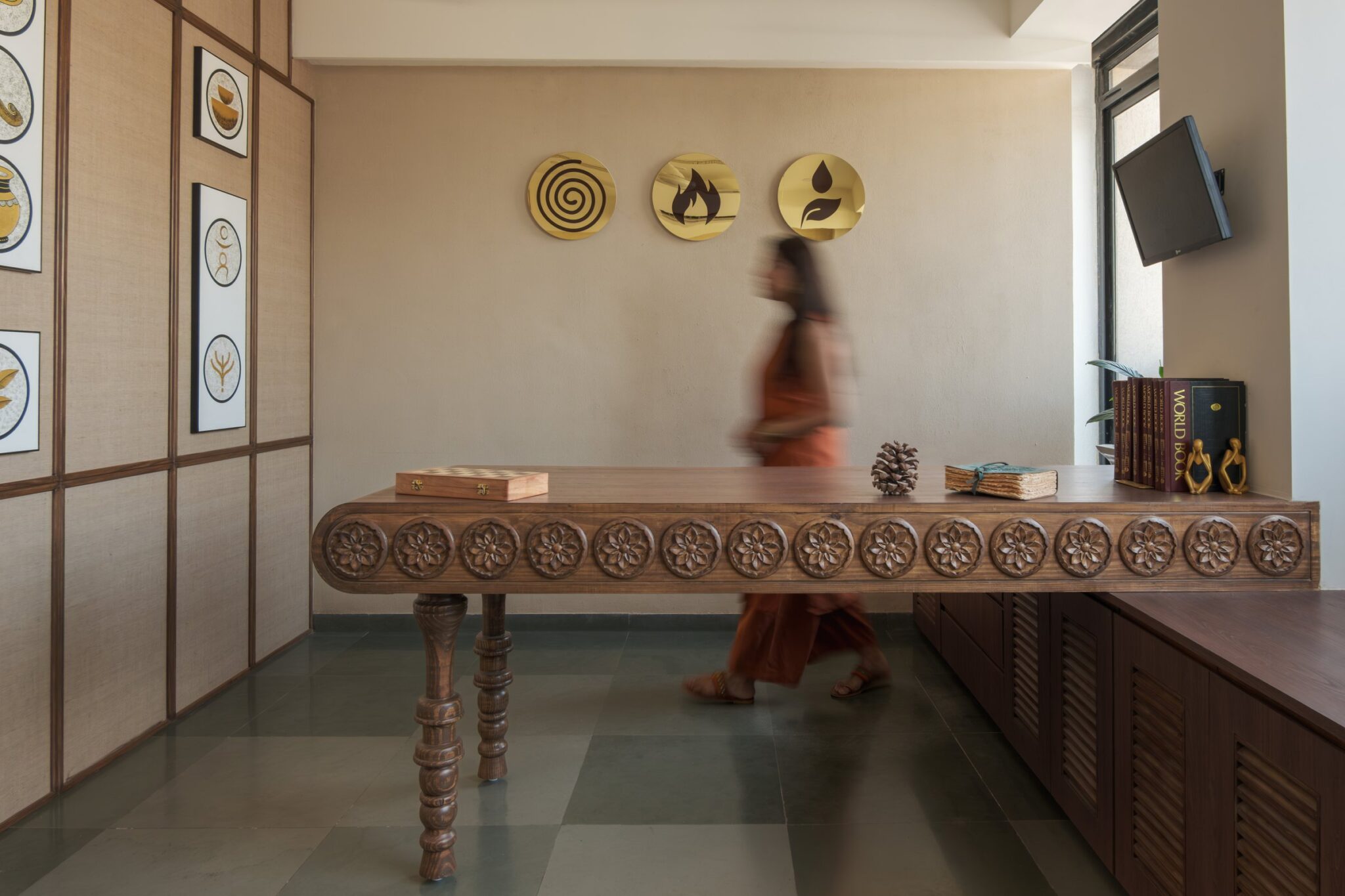
This balance between efficiency and refinement is established from the moment of arrival. On the entry level, a wood-framed enclosure contains the internal staircase linking the two floors, while a signage wall anchors the brand’s presence with understated confidence. Together, these gestures set the tone for an office that is not only highly organised and performance-driven, but also spatially considered, offering Classique Weaves a back-end workspace that reflects the precision and professionalism of the business it supports.
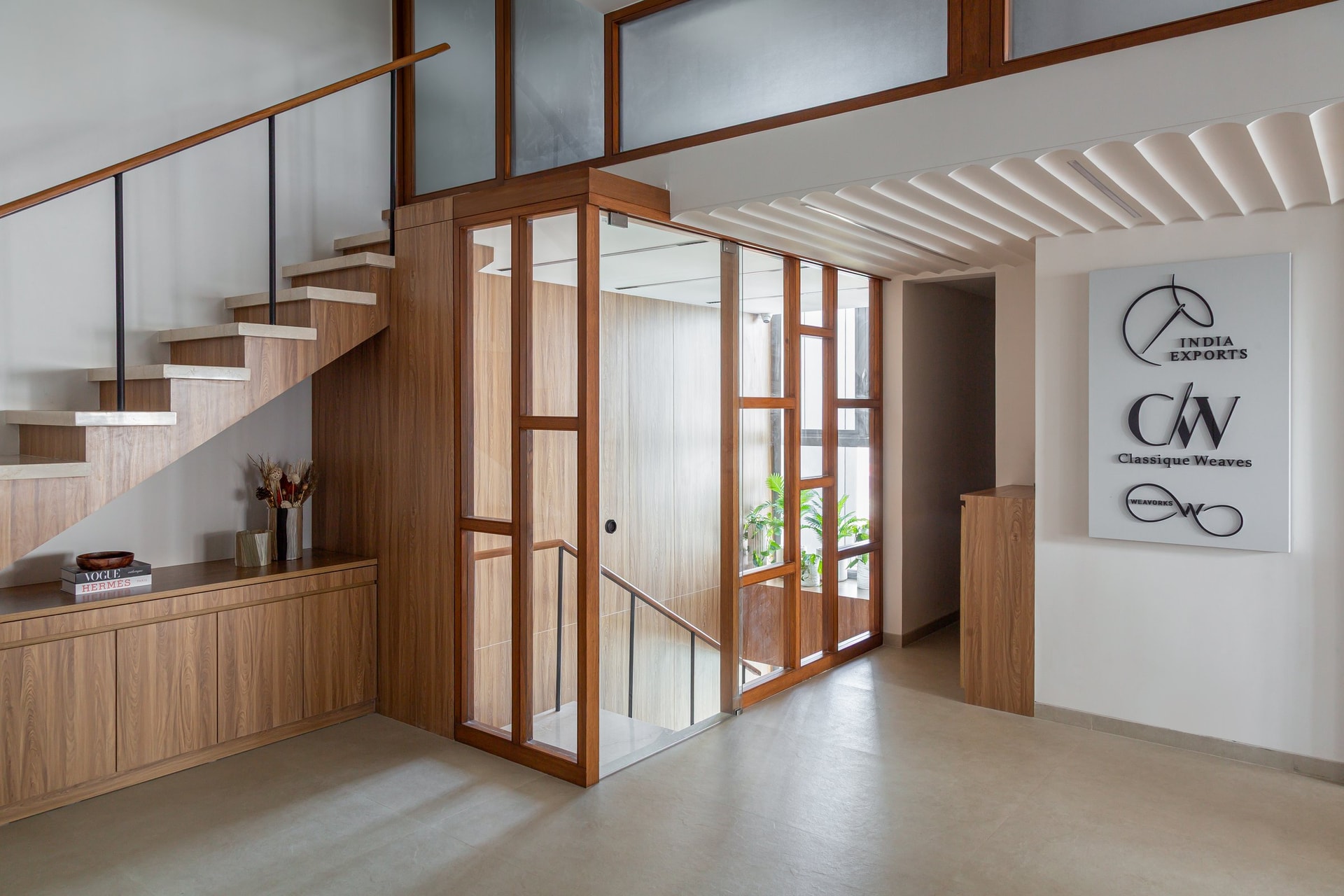
The arrival sequence establishes the project’s larger architectural language with clarity and restraint. A wood-framed glazed enclosure defines the internal staircase, allowing light and visual continuity to pass through while maintaining a degree of acoustic separation between the two levels. Beneath the cantilevered treads, a seamlessly integrated run of cabinetry transforms residual space into functional storage, reinforcing the project’s emphasis on efficiency without visual clutter. Overhead, a gently corrugated ceiling profile introduces a subtle sense of movement, its textile-like rhythm offering a quiet material reference to the export house’s industry while lending the entry experience a distinct spatial identity.
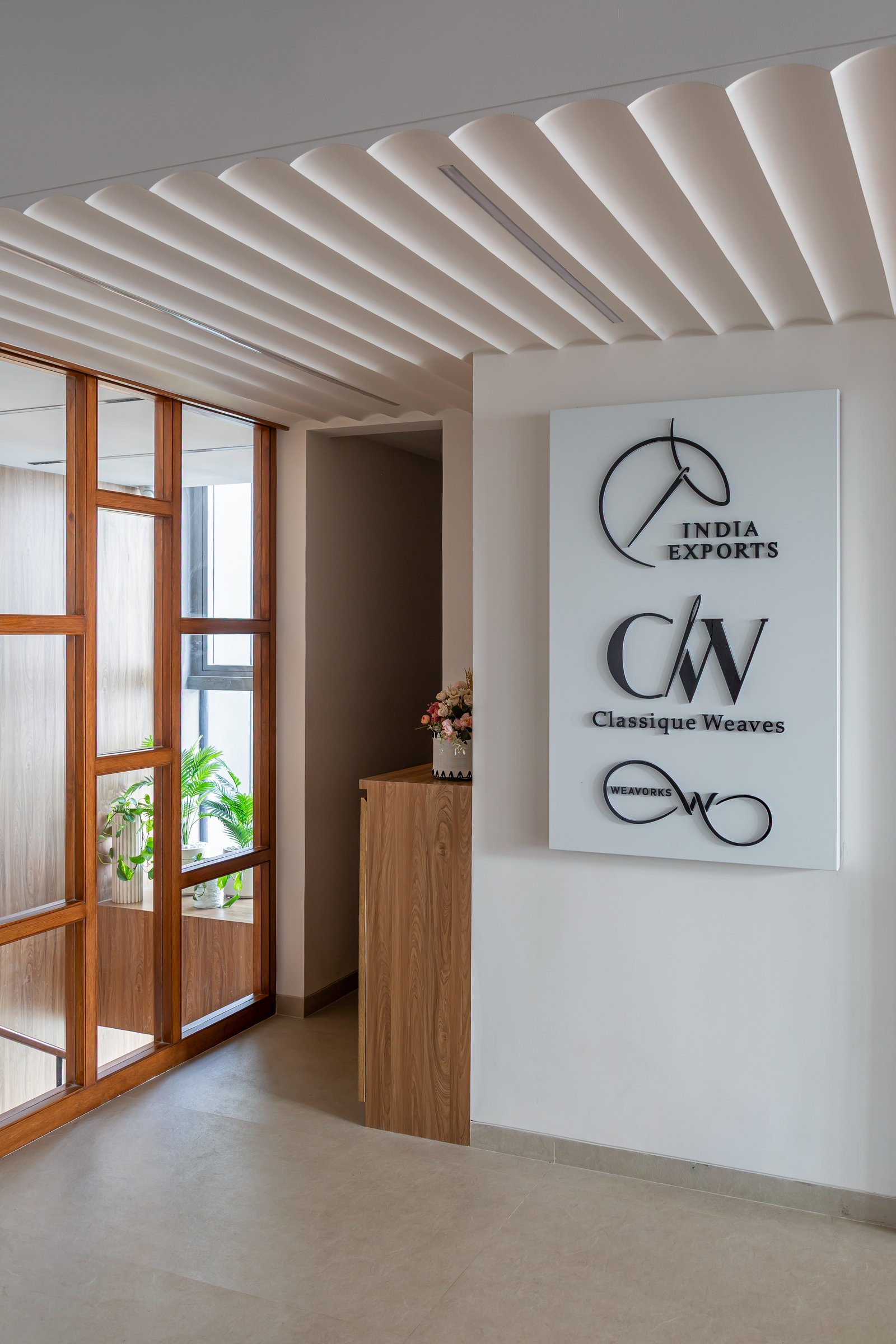
Adjacent to this threshold, a dedicated wall panel bearing the identities of the office serves as a clear point of orientation, introducing the workplace’s brand presence with quiet authority. Above, the fluted ceiling continues as a defining spatial element, its rippled profile catching daylight from the adjoining glazing and lending the entrance a sculptural softness. This interplay of branding, light, and surface articulation sets the tone for the floor beyond, where functionality is consistently tempered by a considered material and architectural language.
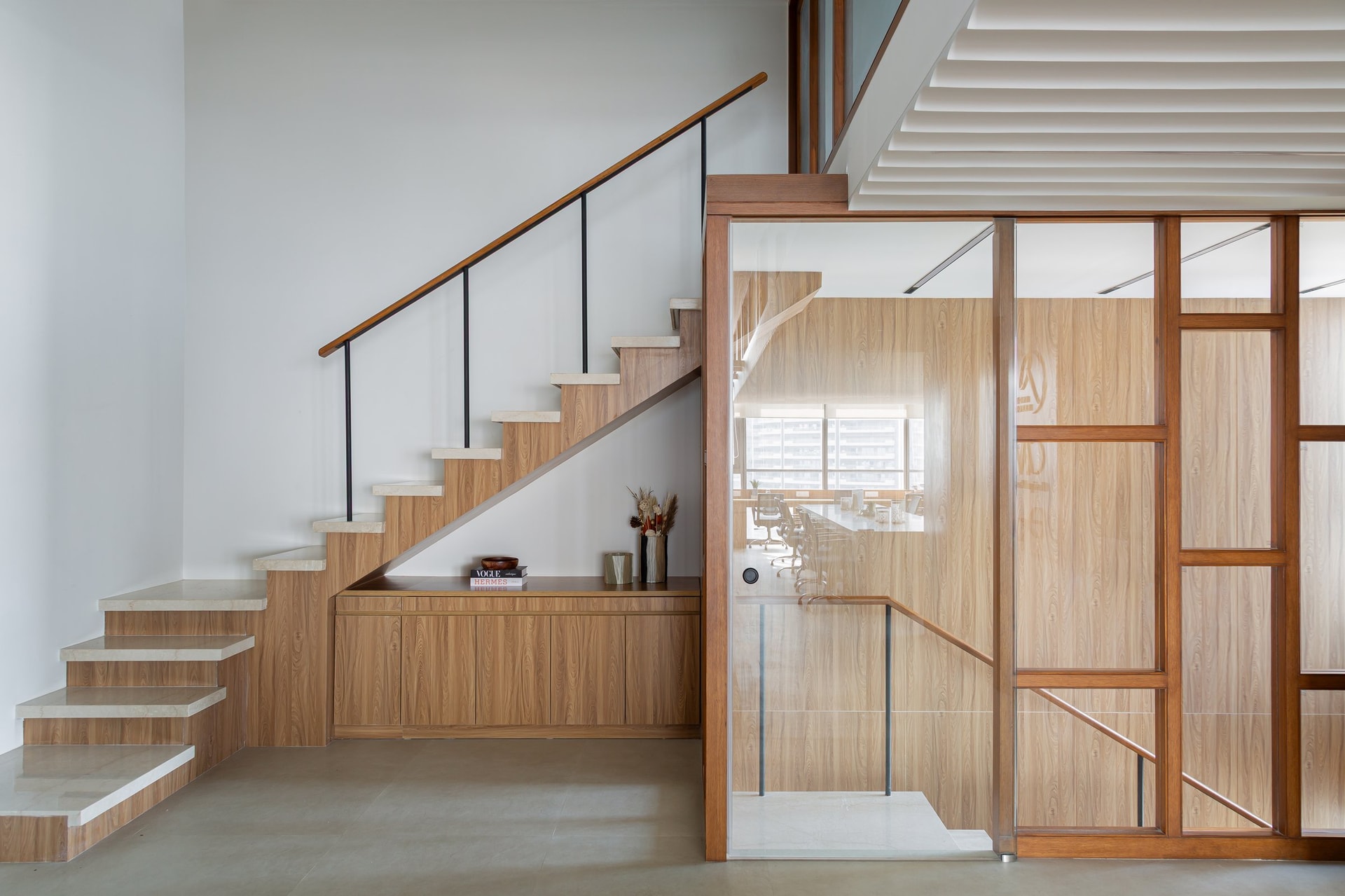
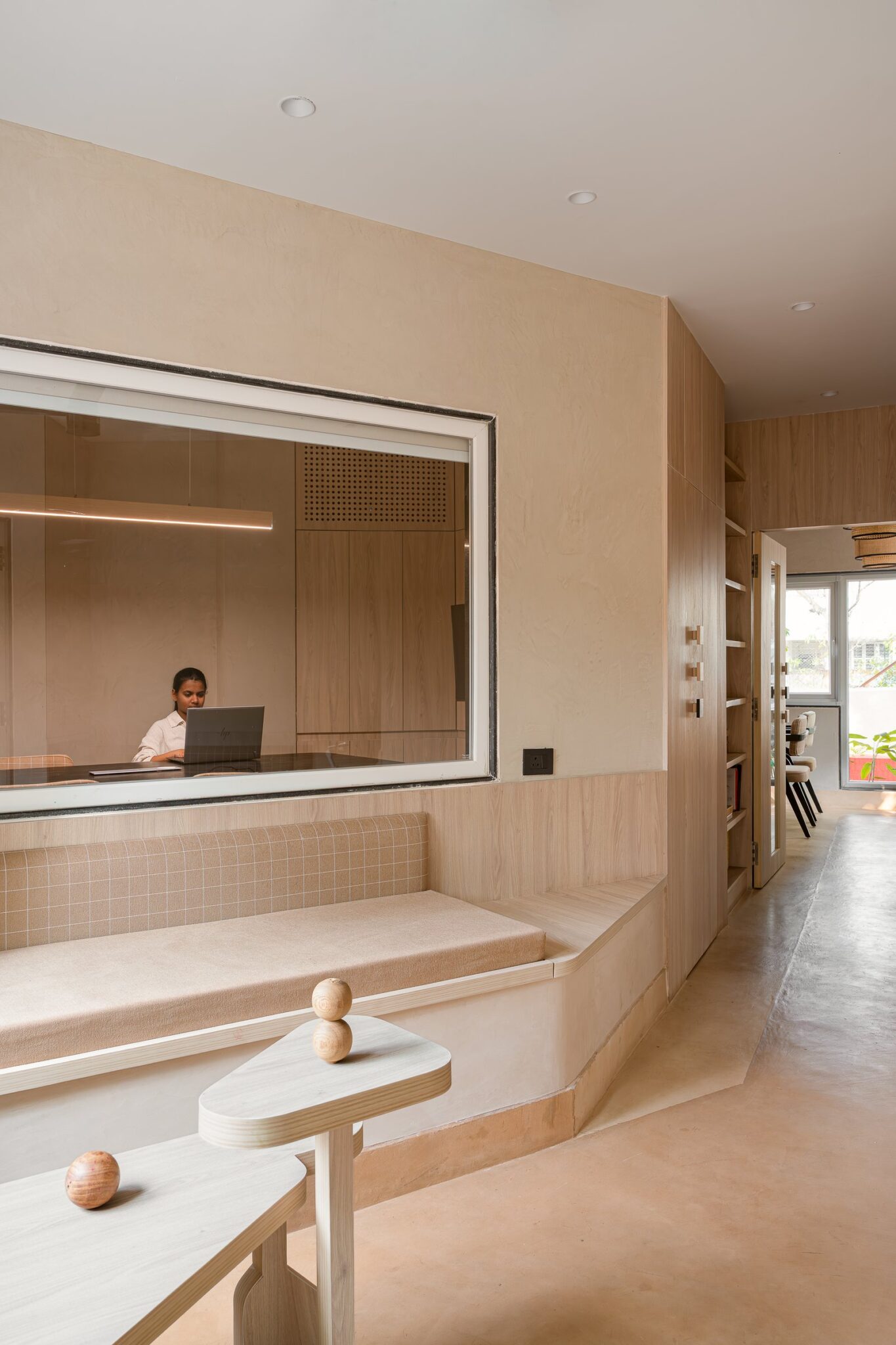
The staircase itself is treated as a piece of architectural furniture. Stone treads cantilever from a wood-clad spine, the balustrade reduced to a slim metal upright run capped with a warm wood handrail, and the entire assembly is paired with a low cabinet plinth that doubles as display surface and concealed storage. Through the glazed partition beyond, the upper workspace is already visible, establishing visual continuity between the two levels.
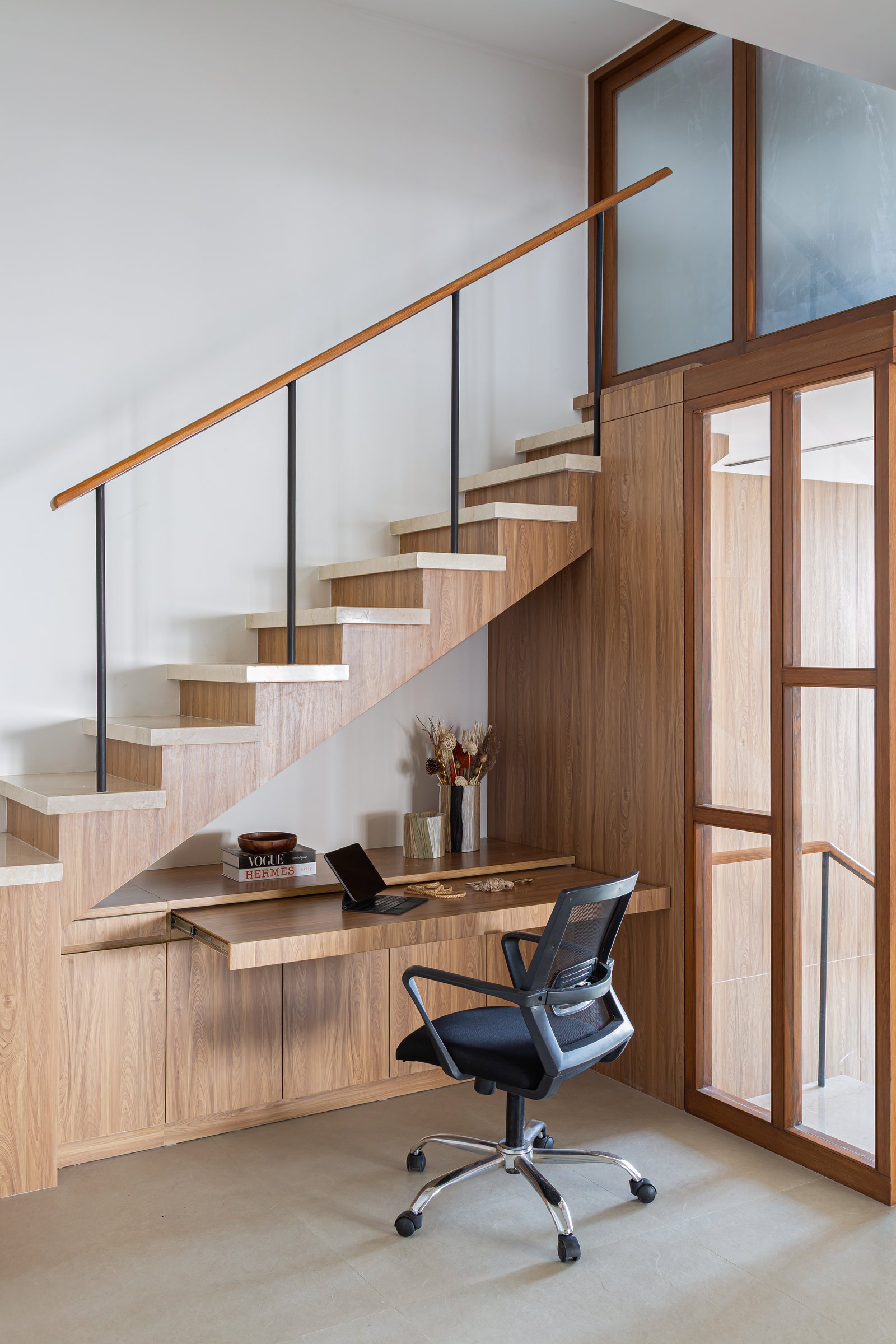
A pull-out desk extends from the joinery below the stair, with a task chair drawn up to it and a small styled shelf above; the entire composition tucks itself back into the cabinetry when not in use. It is a study in spatial intelligence, a working surface produced from what would conventionally be a leftover triangle of floor.
““The overall concept seeks to elevate a functional office into a cohesive ecosystem – one that encourages productivity, reflects the company’s work culture and creates a balanced rhythm between operations and work life.””
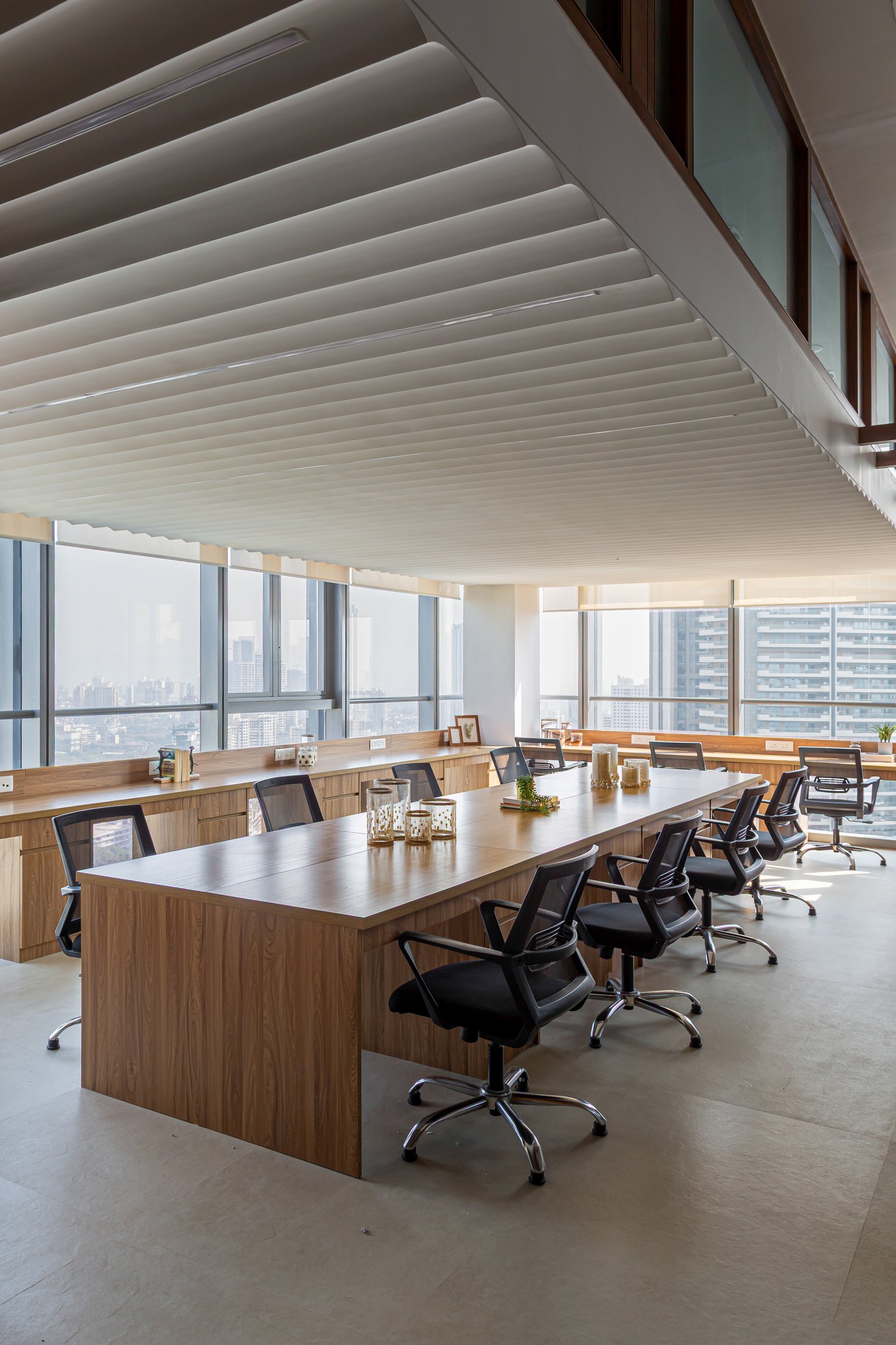
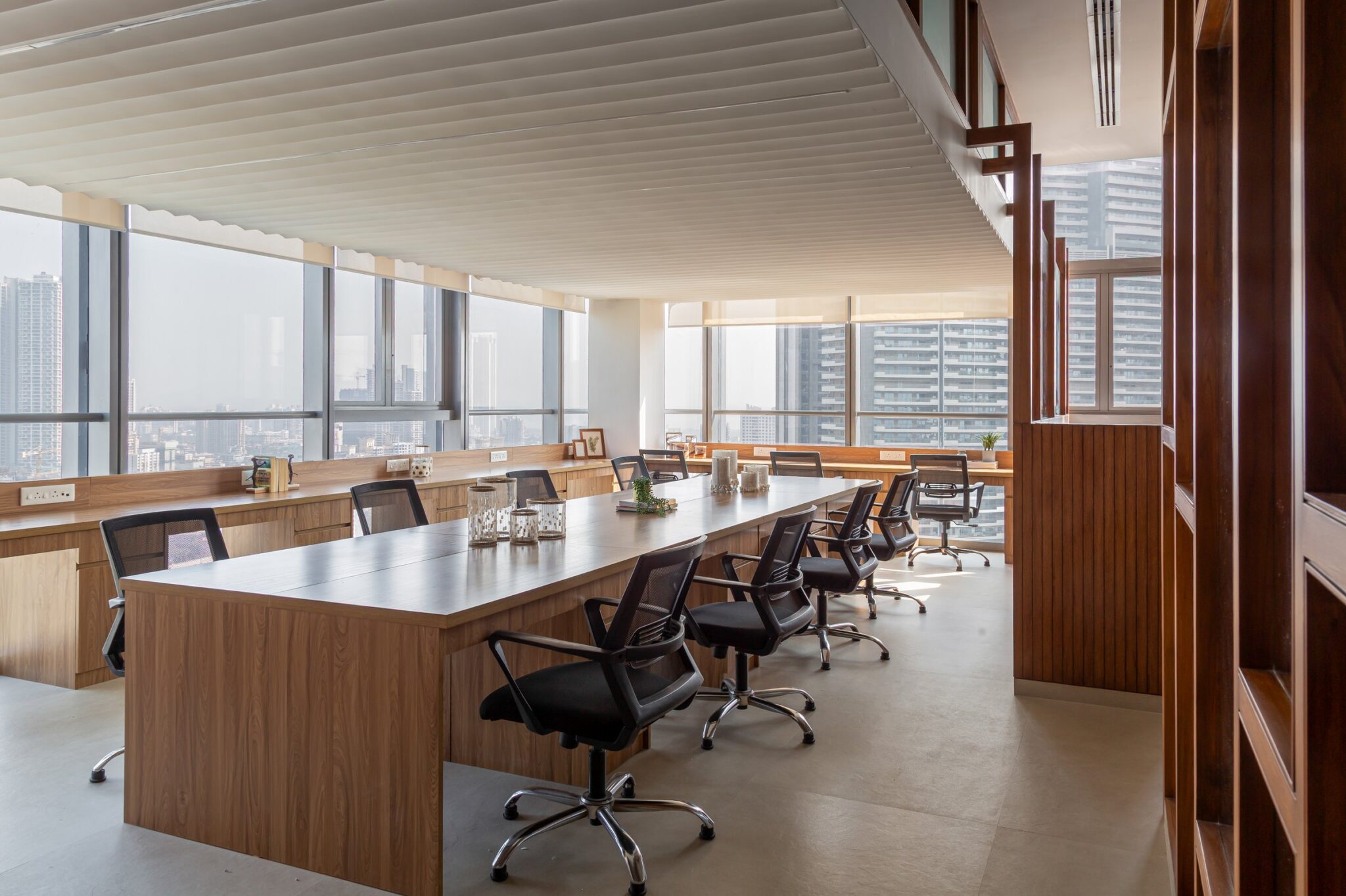
Upstairs, the central workspace opens into the project’s most generous volume. A long shared worktable, finished in warm wood-grain, runs the length of the room beneath the curved plaster ceiling, while the perimeter is wrapped in a continuous credenza that doubles as both individual workstation and concealed storage. Mesh-back task chairs cluster around the table in working configuration; tall windows on two sides return the Mumbai skyline as the floor’s quiet backdrop.
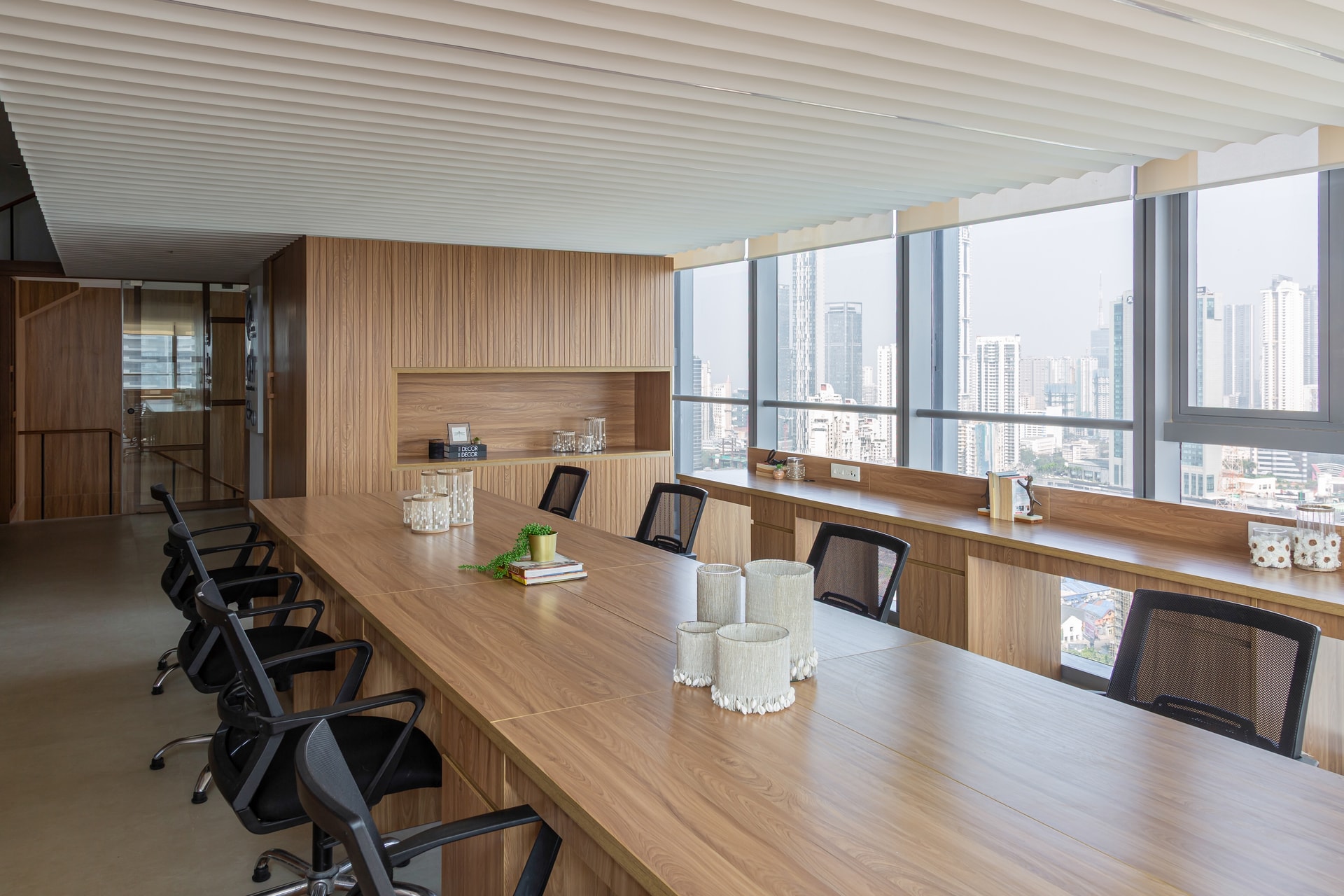
The room’s most considered gesture lies in the way the perimeter workstation responds to the building’s gentle curve. Rather than imposing a rigid rectilinear layout onto the shell, the joinery follows the line of the façade, unfolding as a continuous band of warm wood that maximises the available edge and gives each workstation a direct relationship to the panoramic glazing. The move lends the workspace both efficiency and spatial coherence, allowing the architecture of the shell to shape the experience of work rather than be concealed by it. Overhead, the fluted ceiling extends through the depth of the room, reinforcing this sense of continuity while drawing the eye across the full span of the space.
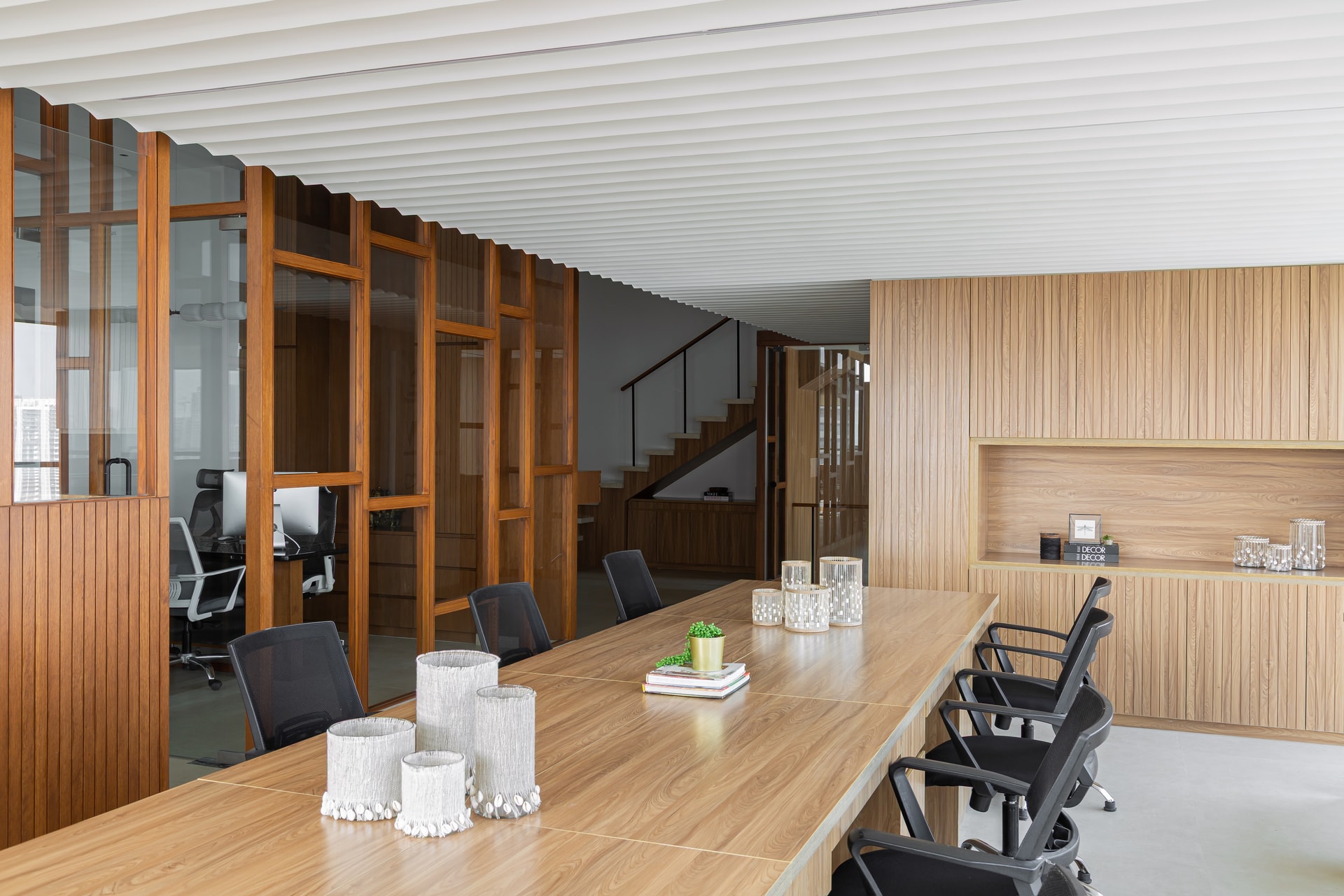
Viewed from the corridor, the room reveals the precision of its planning. Slatted timber screens define the cabin enclosures, while glazed partitions preserve visual connectivity across the floor, allowing for supervision and openness without compromising a sense of delineation.
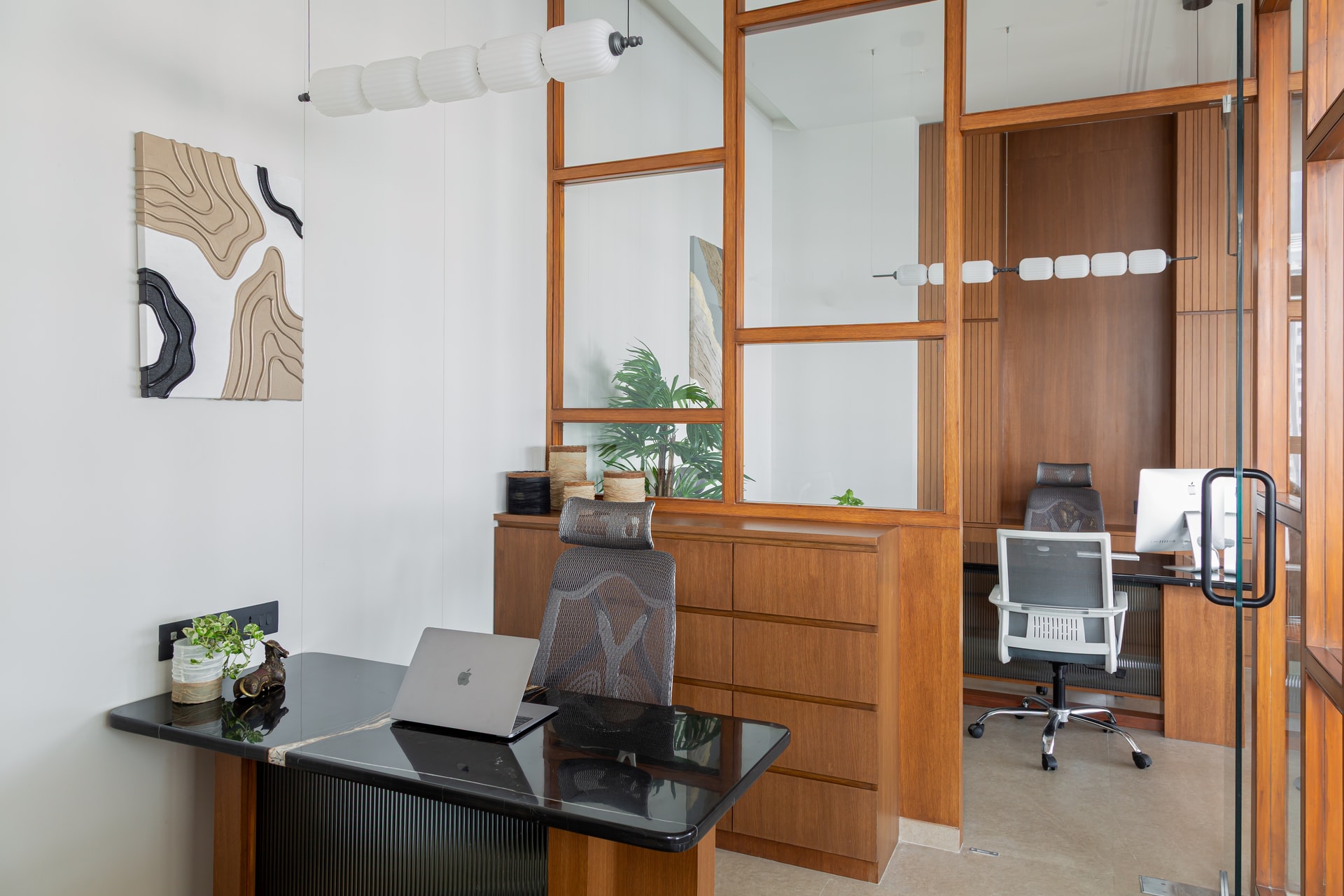
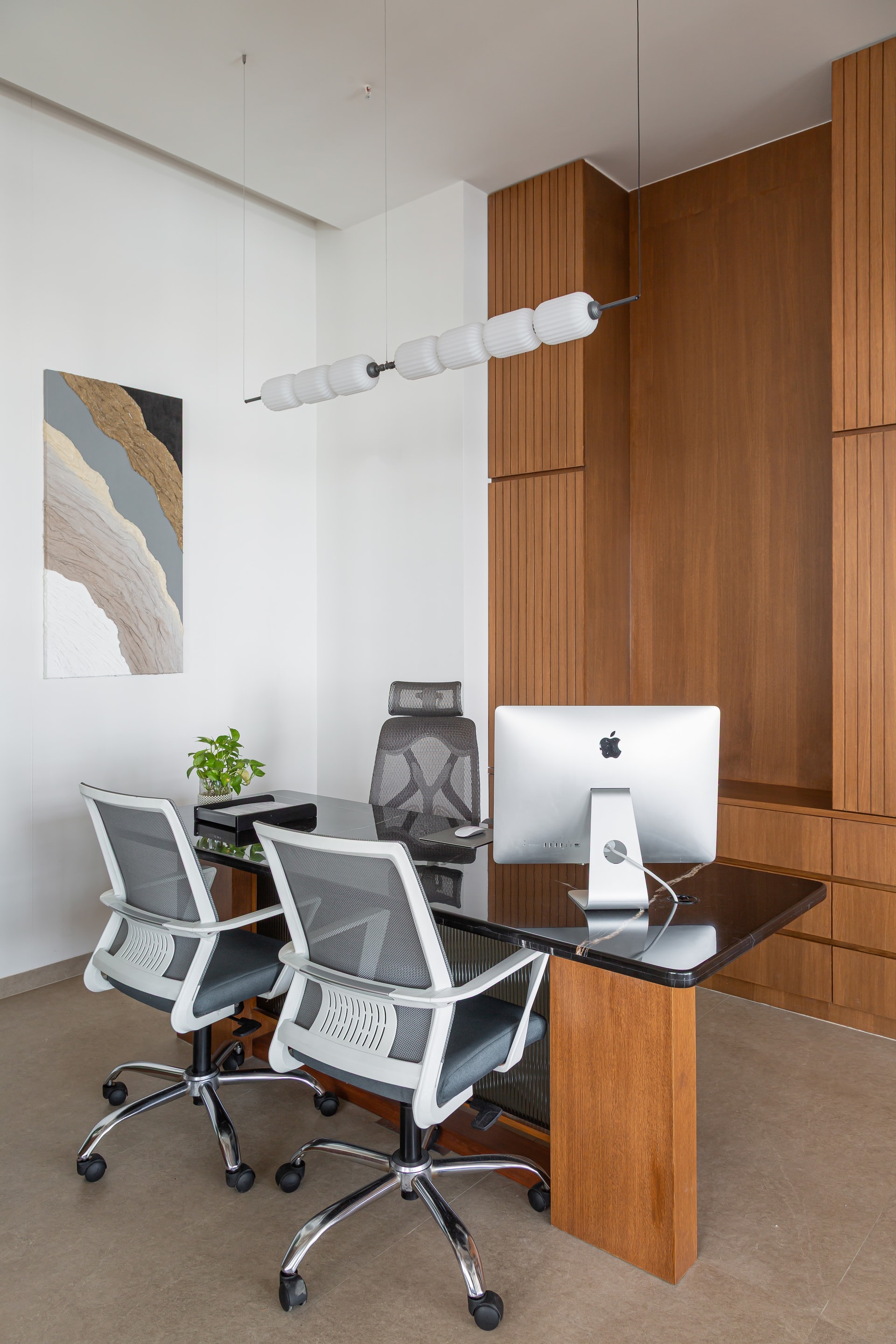
The cabins shift the register from collaborative to focused. A wood desk with a dark stone top pairs with mesh task chairs and a wood-panelled feature wall, while a textured artwork in earth tones brings a tactile counterpoint to the otherwise restrained palette. A horizontal pendant of softly lit globes hovers above the desk, calmer in temperament than the open workspace beyond.
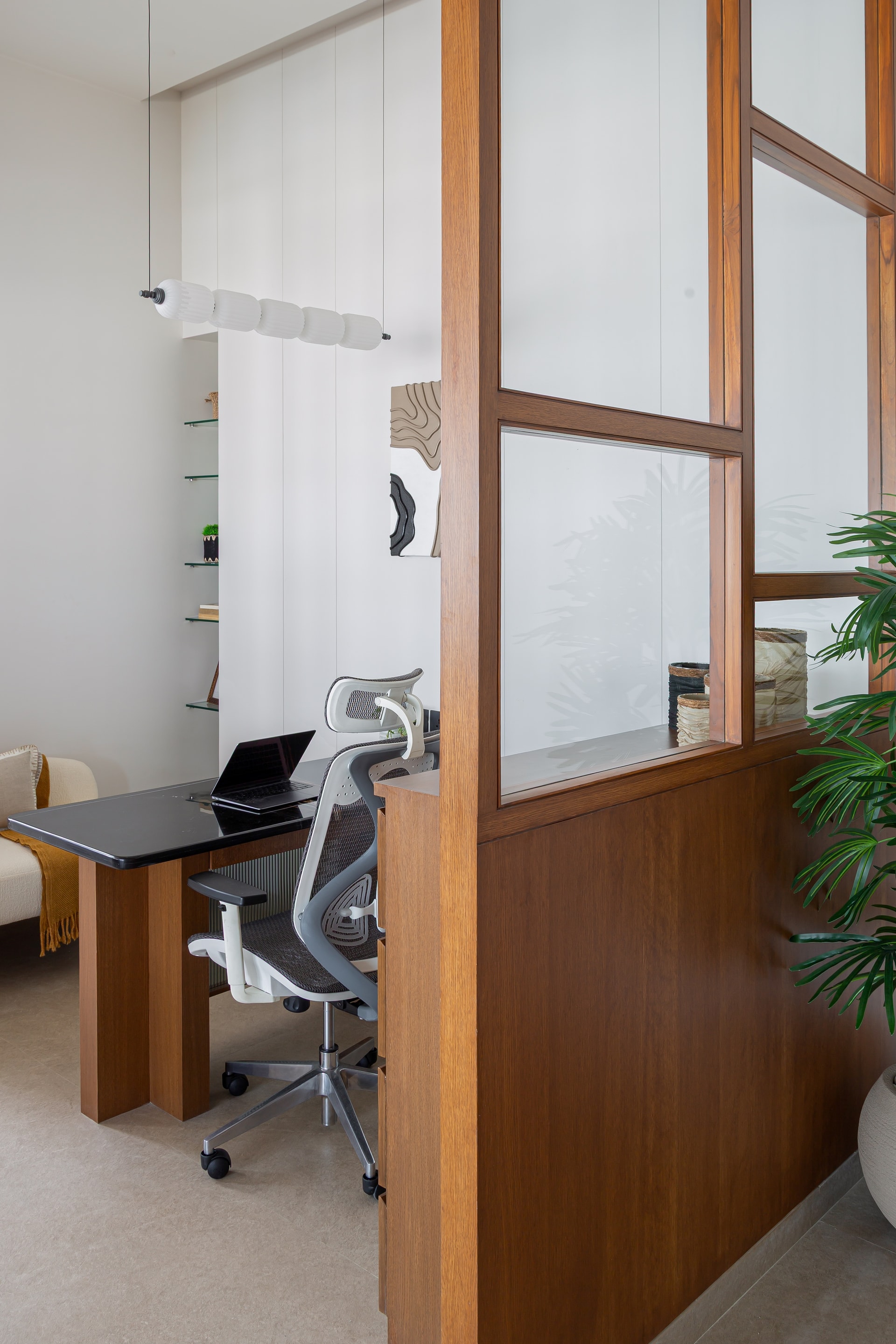
An upholstered seat in cream is set against the desk, paired with a wall-hung graphic artwork in beige and charcoal that picks up the cabin’s tonal palette. The pendant fixture continues overhead, its softly ribbed globes lending the room a domestic ease that tempers its corporate function.
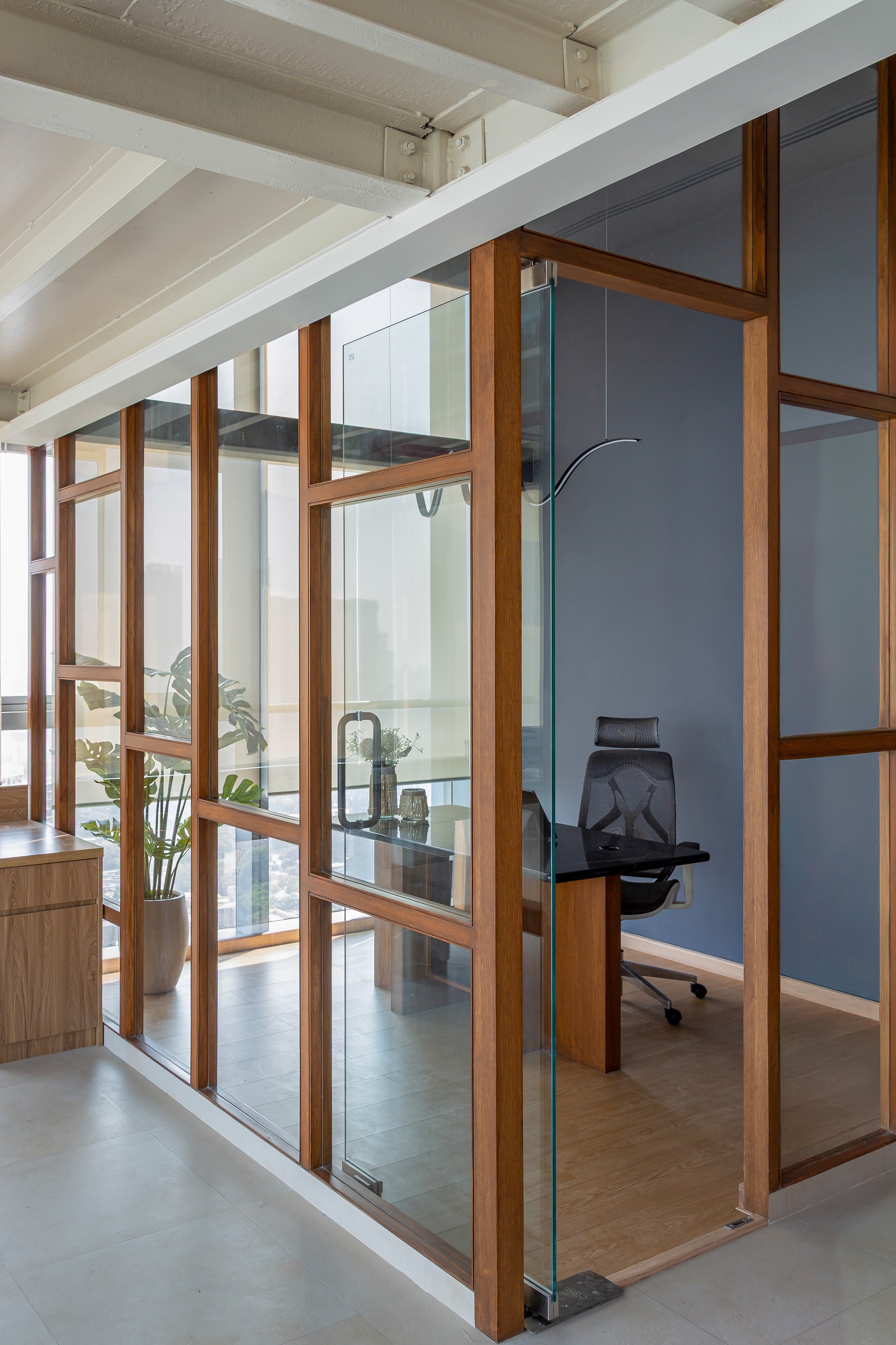
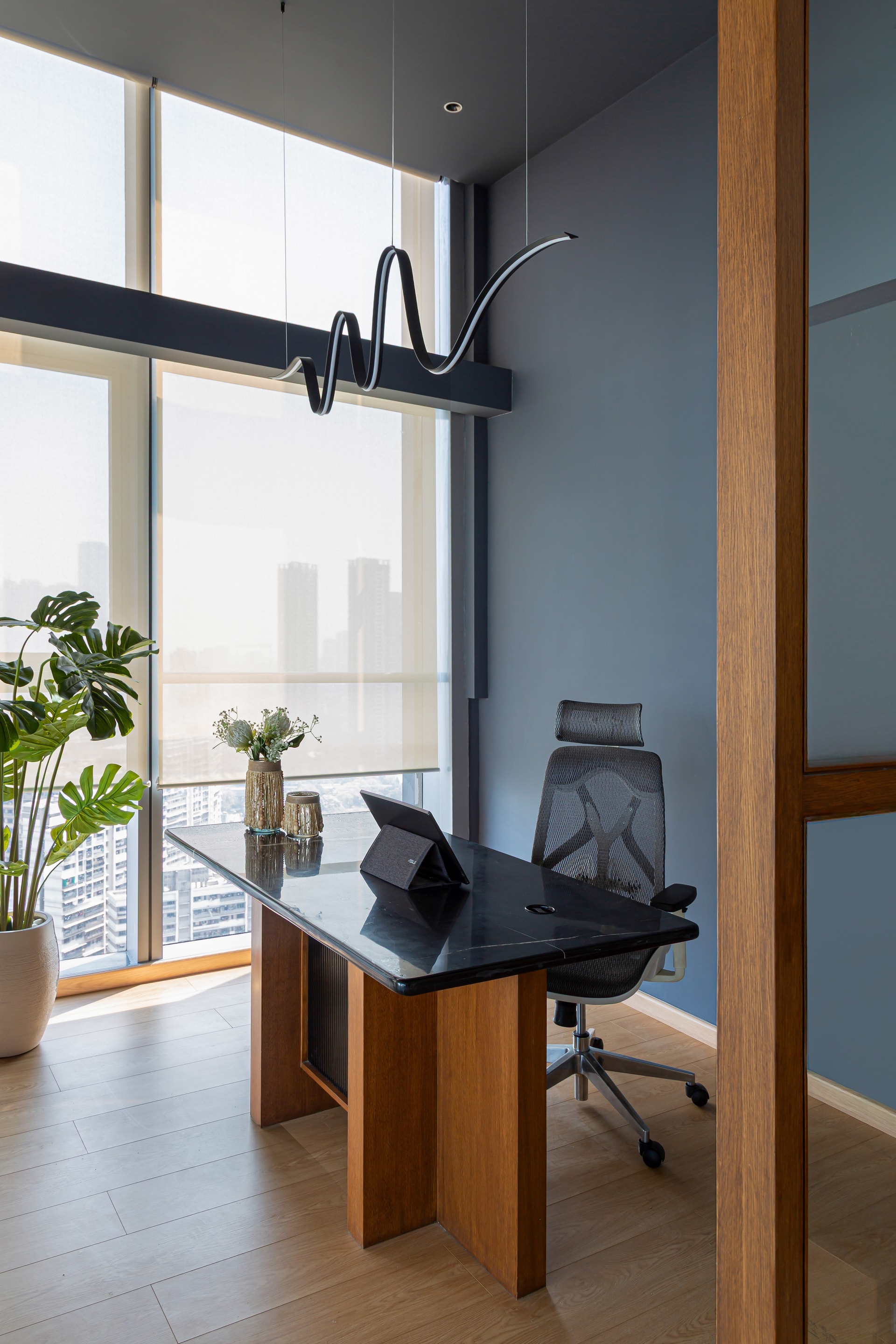
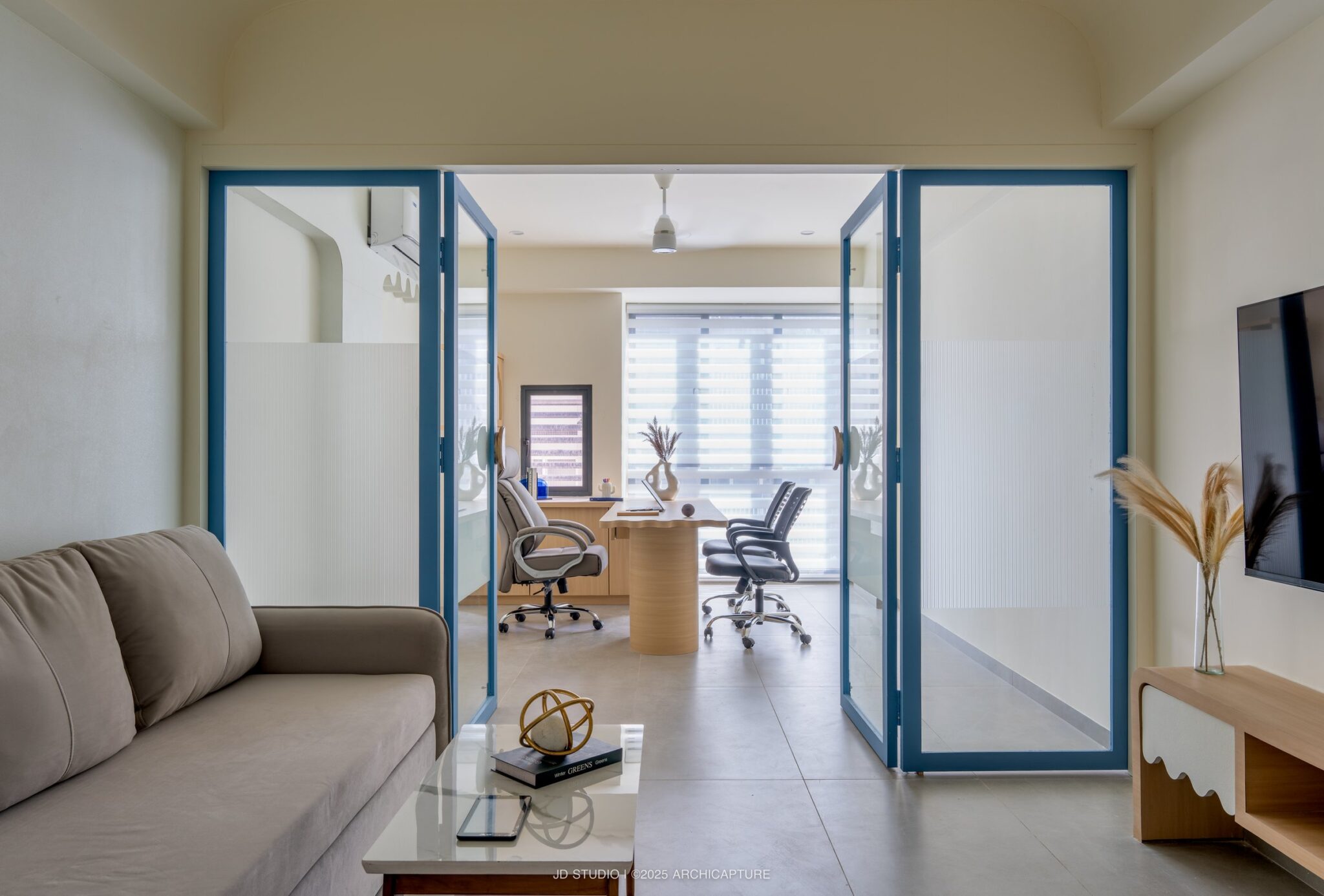
A second cabin departs from the rest of the project in deliberate counterpoint. Slate-blue walls and a sculptural ribbon pendant in matte black hover above a wood desk with a dark stone top; floor-to-ceiling glazing extends behind, framing the Mumbai skyline as the room’s principal artwork.
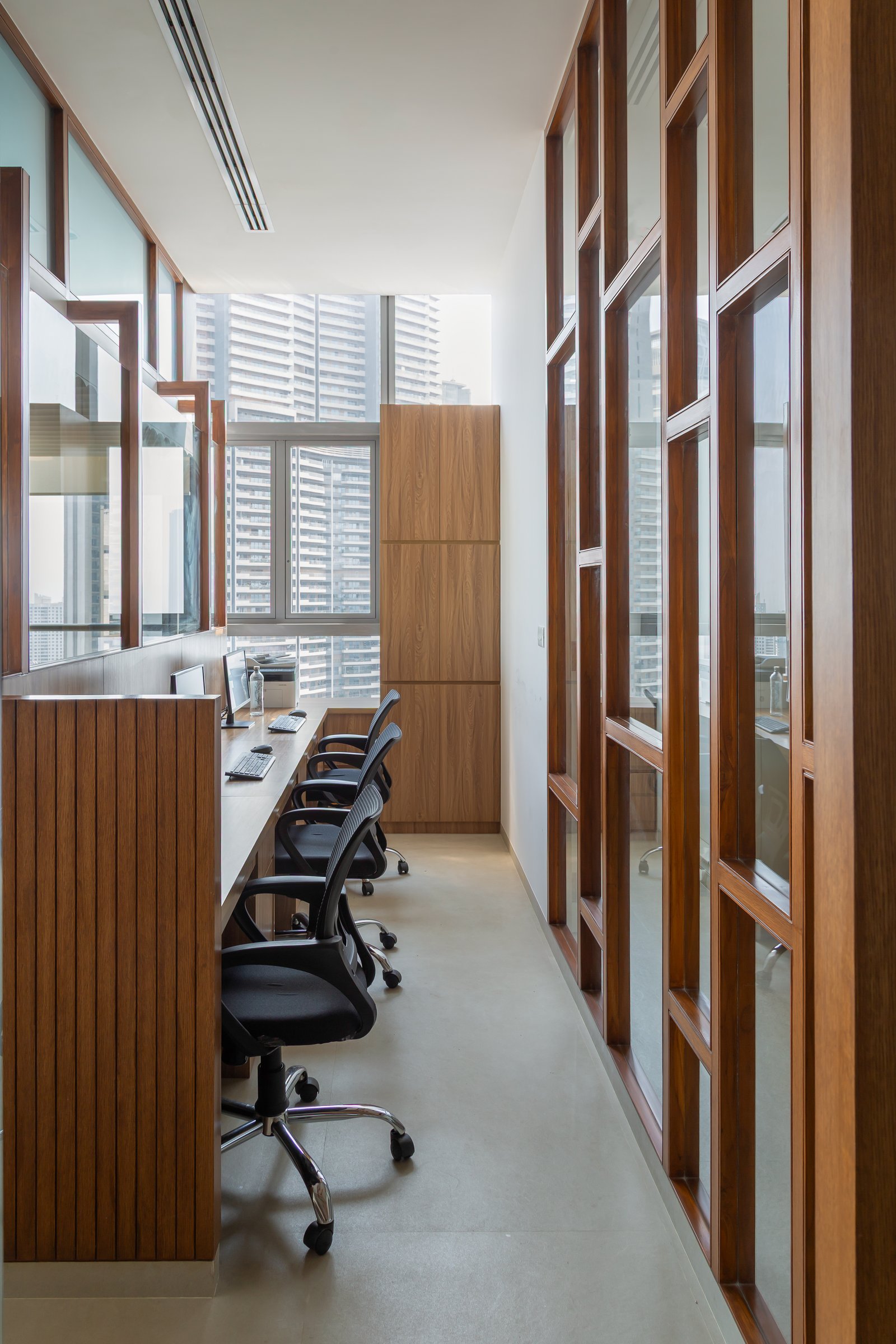
A secondary work spine resolves the floor’s narrower zone with the same discipline. A continuous slatted wood front conceals the desk pedestals, a row of task chairs lines up along the working edge, and a tall storage cabinet anchors the far end; a glazed-and-wood partition along one side holds the corridor open to light from the adjoining facade. The treatment is consistent with the larger floor without simply repeating it.
What The Loom Loft proposes is a workplace grammar in which warmth and operation are not opposing demands but complementary disciplines. The export house’s daily rhythm, sampling, dispatch, administration, and visual review, finds an architectural register that supports it without austerity, replacing the industrial-shell default with structured wood-grained joinery and a quietly sculptural ceiling.
The result is an office that reads as composed rather than sparse, considered rather than corporate. For a back-office environment, that is a meaningful reframing: a working interior that treats its employees as the project’s primary audience, and lets the city beyond the glass do the work of spectacle.